09.02.2012
Departement Physik

Education


Lectures and excercises

Information and materials for current and past lectures and excercises.

Offers for master students and project students

We may have opportunities for

see below for details. Feel free to contact Michel Calame (molecular electronics), Andreas Baumgartner (carbon nanotubes, graphene) or Prof. Schönenberger if you are looking for a project.


Making contact: investigating new binding schemes in molecular junctions

For master or project students

Earliest start: 2011-03-30

Illustration

The mechanically controlled break junction technique is a well-established system to investigate the electronic properties of single or few molecules. The molecular devices are fabricated via state-of-the-art nano-lithography processes. A good stability and reproducibility of the molecule – metal bonds is crucial for such measurements.

Besides the commonly used thiols, pyridines and amines, there are promising alternative functional groups with interesting properties. The goal of this project is to characterize existing molecular compounds bearing alternative binding groups. Some of the questions asked will be, for instance: what is the mechanical strength of the attachment and can we assess the configuration of the molecule(s) between the contacts? What is the nature of the electronic communication between contact and molecule?

The work will involve the reparation, electrical characterization and analysis of various molecular junctions.

If you're interested, please send an e-mail to Jan Brunner, Michel Calame


Electromechanics of molecular junctions

For master students

Earliest start: 2012-01-02

Illustration

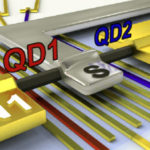
Fabricating electronic devices with atomic precision is extremely challenging. To reach this goal, we combine micro-fabrication techniques with self-assembly of molecular compounds to build devices containing only a few molecules. Molecules can be seen here as the smallest building blocks where structure and atomic function can be engineered.

A major challenge in molecular electronics is the arrangement and understanding of stable and reproducible contacts. Therefore Conducting Atomic Force Microscopy is an attractive approach, enabling the correlation of mechanical and electrical properties in individual molecular junctions.

In this highly interdisciplinary project, you will investigate the stability and breaking forces of atomic and molecular junctions. After learning how to contact single molecules, you will investigate the conductance, stability and breaking forces of molecular junctions for molecules with different binding groups. Further experiments may include the breaking of contacts established through pi-stacking of the molecules or stability measurements on a gold-gold bond in different environments and conditions.

If you're interested, please send an e-mail to Cornelia Nef, Michel Calame


Chemical Vapor Deposition (CVD) of Graphene

For project students

Earliest start: 2011-03-01

Illustration

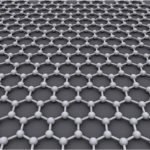
A. Geim and K. Novoselov have just won the 2010 Nobel price in physics with their discovery of graphene in 2004. The goal of this project is to grow large-area and high-quality graphene by chemical vapor deposition (CVD) on copper substrate. Afterwards, the graphene shall be transferred from copper onto an insulating substrate for further exploration. In a second step its startling new electrical characteristics could be investigated (e.g. master thesis).

If you're interested, please send an e-mail to Cornelia Nef, Wangyang Fu