Prof. Dr. Christian Schönenberger
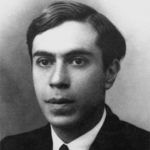
Christian Schönenberger is a professor in experimental condensed matter physics at the University of Basel, where he leads the nanoelectronics group.
His research interest is in unravelling fundamental aspects of charge transport in nanodevices by conducting novel experiments.
He is advisor for many public organizations and an elected life-time member of the Swiss Academy of Technical Sciences.
He is also the acting director of the Swiss Nanoscience Institute and the NCCR Nanoscale Science.
-
Curriculum Vitae
Christian Schönenberger (CS) has always been engaged in a wide range of topics. He could enjoy the beauty of natural science the first time at the physical chemistry department of ETHZ where he was working as an electrical engineer, developing pulsed lasers for molecular spectroscopy. This motivated him to study a second time, after electrical engineering, physics. He did his PhD in experimental physics at the IBM Zurich research lab in the early time of scanning-probe microscopy. He demonstrated the first magnetic force microscope that could image magnetism and topography simultaneously.
He then moved to Philips Research (NL) where he later became a senior staff member. At Philips he developed, among other things, a low-temperature scanning tunnelling microscope which allowed for the first time to probe electron correlations in devices at the single-electron level. He was appointed full professor at the Univ. of Basel in 1995 where he established the nanoelectronics group. Low temperature physics and micro- and nanofabrication was all build up by the CS at Basel from scratch. This initiative established the grounds for nanoelectronics in Basel and helped nanoscience to become a major focus at the Department of Physics. This led to a series of appointments in nano- and quantum science, experimental and theoretical.
As the most important recognition, the Department of Physics became the Swiss leading house in nanoscience in 2001. CS was a co-founder, later the co-director and since 2006 he is the director of this centre. Under his initative, the scope of the centre was further extended to applied sciences, leading to the foundation of the Swiss Nanoscience Institute in 2006. CS is also a co-founder and an active participant within QC2, which is the Basel Centre of Excellence in Quantum Computing and Quantum Coherence. Though having remained a small Department with only 12 tenured professors, the visibility could substantially be raised over the last 15 years. Today, the Department of Physics at the University of Basel is a leading institution in the field of solid-state nanoscience.
-
Interests
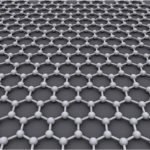
Nano electronics, charge- and spin-transport in low-dimensional systems, molecular electronics, spintronics, nanowire and quantum-dot physics, carbon nanotubes and graphene, shot-noise and charge-fluctuation phenomena, nanodevice based sensors. -
Address
Nanoelectronics group at the Department of Physics of the University of Basel
Swiss Nanoscience Institute, University of Basel
University of Basel, Klingelbergstrasse 82, CH-4056 Basel, Switzerland
christian.schoenenberger@unibas.ch , www.nanoelectronics.ch -
Education
1976-1979 Electrical Engineer of Applied Sciences 1982-1986 Physics at the ETH-Zürich 1986-1990 Ph.D. thesis at the IBM Research Laboratory at Rüschlikon, Switzerland on Magnetic Force Microscopy -
Career
1979-1980 Molecular Spectroscopy Group of Prof. K. Dressler at Physical Chemistry at ETH-Zürich 1986-1990 IBM Research Rüschlikon 1990-1992 Postdoctoral Fellow at Philips Research in Eindhoven 1993-1995 Permanent Research Staff Member at Philips Research 1995- Full Chair in Experimental Physics at the Univ. of Basel 2006- Director of the Swiss Nanoscience Institute at Basel -
Memberships
Member of APS, DPG, SPG, SSOM, SATW -
Awards
1990 PhD medal ETHZ 1991 Swiss Physical Society Price 1994 Profil-II award of the Swiss National Science Foundation 2010 Life-time member of the Swiss Academy of Technical Sciences -
Advisor
Freiburg Institute for Advanced Studies (FRIAS), Adolph Merckle Institute (AMI), Helmholtz Gesellschaft, Volkswagen Gesellschaft, CEA (Centre de Saclay), Landesstiftung Baden-Würtemberg, Deutsche Forschungsgemeinschaft. -
Reviewer
For major national and European bodies, such as SNF (Swiss National Science Foundation), DFG (Deutsche Forschungsgemeinschaft), FOM (Stichting voor Fundamenteel Onderzoek der Materie), CNRS, SFI (Science Foundation Ireland), SSF (Swedish Foundation for Strategic Research), US-NSF, GIF (German-Israeli Foundation), as well as for major journals, such as Nature, Nature Physics, Nature Nano, Science, Physical Review Letters, Physical Review B, Nano Letters ... -
Impact
140 research papers listed in ISI Web of Knowledge, H-index = 41, with 53 citations per publication on average, >120 invited lectures at conferences, >75 invitations to seminars and colloquia, supervisor of > 20 PhD theses, (co)organizer of 11 schools, 6 international and 7 national conferences. Of the 19 postdocs and 22 PhD students, who enjoyed working in the CS group at the University of Basel, 10 persons stayed in academia, of whom 5 became tenured professors. Over the last ten years, CS has attracted more than 10 Mio Swiss Fr. of third party grants for his own group. In addition, he was strongly engaged in the acquisition of large network and leading house grants providing ~ 80 Mio Swiss Fr. (including matching funds) to the Faculty of Natural Sciences. The CS group has been participating in 10 EU/ESF projects with CS as the PI from the University of Basel.
Science synopsis
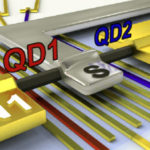
The nanoelectronic group of the University of Basel does experiments with nanodevices to explore fundamental electrical properties in confined geometries. Experiments are done in micron-sized conventional semiconductors, novel nanomaterials like carbon nanotubes (CNTs), semiconducting nanowires (NWs) and graphene, as well as in molecular devices. In addition to fundamental studies, we also pursue applied research by exploiting nanodevices as on-chip (bio)chemical sensors. We use and develop both top-down and bottom-up processes and combine different materials (ferromagnets, superconductors and graphene for example) to arrive at unconventional hybrid systems. CNTs and NWs are used as quantum wires and to define quantum dots with key results in the area of interacting nanosystems (Luttinger liquid), spintronics, and the superconducting proximity effect in reduced dimensions.
List of Selected Publications
- C. Schönenberger, J. A. M. Sondag-Huethorst, J. Jorritsma, and L. G. J. Fokkink, What are the holes in self-assembled monolayers of alkanethiols on gold, Langmuir 10 (1994) 611 (cited 255).
- H. Birk, M. J. M. de Jong, C. Schönenberger, Shot-Noise Suppression in the Single-Electron Tunneling Regime, Phys. Rev. Lett. 75 (1995) 1610 (cited 126).
- C. Schönenberger, B. M. I. van der Zande, L. G. J. Fokkink, M. Henny, C. Schmid, M. Krüger, A. Bachtold, H. Birk, and U. Staufer, Template-Synthesis of Nanowires in Porous Polycarbonate Membranes: Electrochemistry and Morphology, J. Phys. Chem. B 101 (1997) 5497 (cited 266).
- H.-W. Fink and C. S., Electrical Conduction through DNA Molecules, Nature 398 (1999) 407 (cited 684).
- A. Bachtold, C. Strunk, J.-P. Salvetat, J.-M. Bonard, L. Forró, T. Nussbaumer, and C. Schönenberger, Aharonov-Bohm Oscillations in Carbon Nanotubes, Nature 397 (1999) 673 (cited 428)
- C. Schönenberger, A. Bachtold, C. Strunk, and J.-P. Salvetat, Interference and Interaction in Multiwall Carbon Nanotubes, Appl. Phys. A 69, (1999) 283-295 (cited 214).
- M. Henny, S. Oberholzer, C. Strunk, T. Heinzel, K. Ensslin, M. Holland, and C. Schönenberger, The Fermionic Hanbury-Brown and Twiss Experiment, Science 284 (1999) 296 (cited 184).
- M. Henny, S. Oberholzer, C. Strunk and C. Schönenberger, The 1/3-shot noise suppression in diffusive nanowires , Phys. Rev. B 59 (1999) 2871-2880 (cited 96).
- S. Oberholzer, E. V. Sukhorukov, C. Strunk, C. Schönenberger, T. Heinzel, M. Holland, Shot Noise by Quantum Scattering in Chaotic Cavities, Phys. Rev. Lett. 86 (2001) 2114 (cited 56).
- M. Krüger, M. Buitelaar, T. Nussbaumer, C. Schönenberger and L. Forró, The Electrochemical Nanotube Field-Effect Transistor, Appl. Phys. Lett. 78 (2001) 1291 (cited 165).
- M. R. Buitelaar, T. Nussbaumer and C. Schönenberger, Quantum Dot in the Kondo Regime coupled to Superconductors, Phys. Rev. Lett. 89 (2002) 256801 (cited 139).
- A. Kis, S. Kasa, B. Babic, A.J. Kulik, W. Benoit, G.A.D. Briggs, C. Schönenberger, S. Catsicas and L. Forro, Nanomechanics of Microtubules, Phys. Rev. Lett. 89 (24) (2002) 248101 (cited 126).
- S. Oberholzer, E. V. Sukhorukov, and C. Schönenberger, Crossover between Classical and Quantum Shot Noise in Chaotic Cavities, Nature 415, (2002) 765 (cited 57).
- B. Babic, J. Furer, S. Sahoo, S. Farhangfar, and C. Schönenberger, Intrinsic thermal vibrations of suspended doubly clamped singe-wall carbon nanotubes, Nano Lett. 3 (2003) 1577 (cited 49).
- M. R. Buitelaar, W. Belzig, T. Nussbaumer, B. Babic, C. Bruder, and C. Schönenberger, Multiple Andreev Refelection in a Carbon Nanotube Quantum Dot, Phys. Rev. Lett. 91, (2003) 057005 (cited 87).
- C. Beenakker and C. Schönenberger, Quantum Shot Noise, Physics Today, 56-5 (2003) 37-42 (cited 59).
- B. Babic and C. Schönenberger, Observation of Fano-Resonances in Single-Wall Carbon Nanotubes, Phys. Rev. B 70 (2004) 195408 (cited 39).
- S. Sahoo, T. Kontos, J. Furer, C. Hoffmann, M. Gräber, A. Cottet, and C. Schönenberger, Electric field control of spin transport, Nature Physics 1, 99-102 (2005) (cited 130).
- S. Oberholzer, E. Bieri, and C. Schönenberger, M. Giovannini and J. Faist, Positive cross-correlations in a normal-conducting fermionic beam-splitter, Phys. Rev. Lett. 96 (2006) 046804 (cited 28).
- J. Liao, L. Bernard, M. Langer, C. Schönenberger, and M. Calame, Reversible formation of molecular junctions in two-dimensional nanoparticle arrays, Adv. Mat. 18, 2444 (2006) (cited 31).
- M. R. Graber, W. A. Coish, C. Hoffmann, M. Weiss, J. Furer, S. Oberholzer, D. Loss, and C. Schönenberger, Molecular States in Carbon Nanotube Double Quantum Dots, Phys. Rev. B 74 (2006) 075427 (cited 46).
- A. Eichler, M. Weiss, S. Oberholzer, and C. Schönenberger, A. Levy Yeyati, J. C. Cuevas, and A. Martin-Rodero, Even-odd effect in Andreev Transport through a Carbon Nanotube Quantum Dot, Phys. Rev. Lett. 99, 126602 (2007) (cited 32).
- S. M. Wu, M. T. Gonzalez, R. Huber, S. Grunder, M. Mayor, C. Schönenberger, and M. Calame, Molecular junctions based on aromatic coupling, Nature Nano 3 (2008) 569 (cited 35).
- L. Hofstetter, S. Csonka, J. Nygard, and C. Schönenberger, Cooper pair splitter realized in a two-quantum-dot Y-junction, Nature 461 (2009) 960 (cited 24).
- E. Bieri, M. Weiss, O. Göktas, M. Hauser, C. Schönenberger, and S. Oberholzer, Finite-bias visibility dependence in an electronic Mach-Zehnder interferometer, Phys. Rev. B 79 (2009) 245324 (cited 11).
- A. Kleine, A. Baumgartner, J. Trbovic, and C. Schönenberger. Contact resistance dependence of crossed Andreev reflection, Eur. Phys. Lett. 87:27011, 2009 (cited 9).
- S. J. van der Molen, J. H. Liao, T. Kudernac, J. S. Agustsson, L. Bernard, M. Calame, B. J. van Wees, B. J. Ferringa, and C. Schönenberger, Light-controlled conductance switching of ordered metal-molecule-metal devices, Nano Lett. 9 (2009) 76 (cited 35).
- L. Hofstetter, A. Geresdi, M. Aagesen, J. Nygård, C. Schönenberger, and S. Csonka, Ferromagnetic, Proximity Effect in a Ferromagnet Quantum-Dot Superconductor Device, Phys. Rev. Lett. 104:246804, 2010.
- S. de Franceschi, L. Kouwenhoven, C. Schönenberger, and W. Wernsdorfer, Hybrid superconductor-quantum dot devices, Nature Nano 5 (2010) 703.