09.02.2012
Departement Physik

Positions

We currently have opportunities for

Post-Doctoral Fellow / Graduate Student Position

Post-doc Candidates should have a Ph. D. in experimental physics or similar and need a strong background in some of the following areas: mesoscopic physics and experiments, device nanofabrication, cryogenic experiments, low noise electronic measurements, molecular electronics, experiment control and data acquisition. German language proficiency is not necessary. The candidate is expected to work together with and help advise students.

Ph. D. Candidates need to hold a masters (or equivalent) degree, preferably in physics or nanosciences. Some prior experience in (experimental) physics would be helpful. German language proficiency is not necessary. Graduate students are expected to work together with postdoctoral fellows as well as graduate and undergraduate students.

Both graduate students and post-doctoral fellows in our Department are required to assume teaching assistant responsibilities during the semester (half a day to one day per week effort).

The Department of Physics in Basel offers a highly stimulating environment with active and internationally recognized research groups in both experimental and theoretical condensed matter physics.
To apply, please email a curriculum vitae, publications and/or a thesis as well as names and contact info of referees to Christian. A description of interests and skills would be helpful.


PhD student position: Quantum Entanglement in Electronic Solid State Devices.

The project

A fellowship for an experimental PhD thesis work is now available in the Nanoelectronics group
(www.nanoelectronics.ch) at the University of Basel. We are seeking for an excellent student with a
degree (Diploma or Master) in physics or nanoscience who is eager to do leading edge experimental
research in the field of quantum transport in nanodevices.
This fellowship is part of a new long term project, called QUEST, in which we aim to experimentally
establish a continuous probe of entanglement generation in the electrical signal of quantum devices. It is
set up in two parts: the realization of a highly efficient source of spin-entangled electron pairs and
the exploration of different correlation measurements providing a measure of entanglement “on the
fly”
. During the last decade a wealth of theory proposals have appeared, addressing entanglement in
electronic devices. The interaction of particles in solid-state devices provides a natural force for the
appearance of entanglement. Examples are correlation between electrons and holes in the emission on a
tunnel junction, or the “naturally” occurring Cooper pairs in s-wave superconductors. While first results on
the realization of sources of entangled electron pairs have appeared (among them a Nature 2009 from
our group), there are no experiments demonstrating entanglement in transport of any of those devices.
We aim to change this and propose to implement high-bandwidth current correlation methods up to
the forth moment, enabling to test Bell-inequality and quantum state tomography. Based on our long
standing experience in the measurement of second-order correlations in nano devices, we are well
prepared for this very challenging goal.

Illustration

Your profile

The successful candidate should be interested in nanoelectronics and quantum physics. Most of the
work will be experimental. This includes the fabrication of nanodevices using state-of-the art high
resolution fabrication techniques, measurements of tiny electrical signals, cooling devices and electronics
to temperatures as low as 20mK and using high-frequency rf electronics. It is crucial that the applicant
has done some experimental work before, where he/se has realized to have a pronounced affinity to
experimental work. The candidate is eager to be in the lab, where real things happen.
The appointment shall start in spring to summer 2012.

Contact

Candidates should submit their CV together with at least 2 suggestions for reference persons to:

Prof. Christian Schönenberger
Department of Physics
University of Basel
Klingelbergstrasse 82
CH-4056 Basel
Switzerland
e-mail: Christian.Schoenenberger@unibas.ch
phone: +41 61 267 3690 ; fax: +41 61 267 3784


PhD student position: Spin-dependent transport in carbon-based nanodevices .

The project

A fellowship for an experimental PhD thesis work is available in the Nanoelectronics group
(www.nanoelectronics.ch) at the University of Basel. We are seeking for an excellent student with a
degree (Diploma or Master) in physics or nanoscience who is eager to do leading edge experimental
research in the field of quantum transport in nanodevices.
This fellowship is part of a project, called SE2ND (Source of Electron Entanglement in NanoDevices), in
which we aim to generate an entangled pair of electrons using a superconducting nanoelectrode as a
source and a low-dimensional nanodevice as a means to separate the pair into two individual, but still
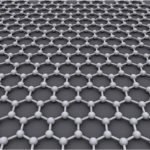
spin entangled electrons (figure a). A device of this kind can be fabricated in nanowires (figure b shows
one based on a carbon nanotube), but also into a sheet of graphene.
The current project focuses on possible routes to detect the electrons in a spin-selective manner. The
goal is to realize efficient spin-filters using ferromagnetic contacts to carbon nanotubes and/or to
graphene. In both area there is already experience available in the nanoelectronics group, so hat the PhD
student does not have to start from scratch.

Illustration

Your profile

The successful candidate should be interested in nanoelectronics and quantum physics. Most of the
work will be experimental. This includes the fabrication of nanodevices using state-of-the art high
resolution fabrication techniques, measurements of tiny electrical signals, and cooling devices and
electronics to temperatures as low as 20mK. It is crucial that the applicant has done some experimental
work before, where he/se has realized to have a pronounced affinity to experimental work. The candidate
is eager to be in the lab, where real things happen.


The appointment shall start in spring to summer 2012.

Contact

Candidates should submit their CV together with at least 2 suggestions for reference persons to:

Prof. Christian Schönenberger
Department of Physics
University of Basel
Klingelbergstrasse 82
CH-4056 Basel
Switzerland
e-mail: Christian.Schoenenberger@unibas.ch
phone: +41 61 267 3690 ; fax: +41 61 267 3784


Postdoc position: Quantum Entanglement in Electronic Solid State Devices.

The project

QUEST is a long term project with the goal to experimentally establish a continuous probe of entangle-
ment generation in the electrical signal of quantum devices. We aim to implement high-bandwidth
current correlation
methods up to the forth moment, enabling to test Bell-inequality and quantum
state tomography
. Based on our long standing experience in the measurement of second-order
correlations in nano devices, we are well prepared for this very challenging goal.
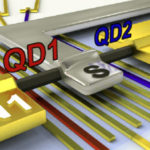
We are looking for a postdoc interested to build up a cryogenic rf-setup with which correlations in
charge transport through two quantum dots coupled to a superconducting source shall be measured. We
target two approaches: one based on charge detection using impedance reflectometry and the other on
direct high-bandwidth current measurements.

Illustration

Our offer

The nanoelectronics group at the University of Basel (www.nanoelectronics.ch) has many years of
experience in exploring fundamental electrical properties of nano-devices and pioneered shot-noise
correlation measurement early on. We performed the first shot-noise experiment in the Coulomb
blockade regime of a single-electron tunnelling device, displaying charge correlation induced shot-noise
suppression. This was followed by a series of noise experiments, including the textbook Hanbury-Brown-
Twiss beam splitter experiment for electrons (Science 1999). We introduced quantum-dots coupled to
superconducting electrodes, displaying an intriguing interplay between a superconducting and magnetic
ground state, and we succeeded to realize quantum dots coupled to ferromagnets and demonstrated a
gate-tunable spin FET behavior. These novel experiments were only possible, because we have realized
early on the great potential of novel materials, in particular of carbon nanotubes and semiconducting
nanowires, for the realization of hybrid devices embodying superconducting and ferromagnetic
electrodes. The last example along this line has been the Cooper-pair splitter (Nature 2009), which is the
key device in this project. The Cooper-pair splitter serves as a source for EPR electron pairs. The goal of
the project is to evaluate the efficiency and degree of entanglement of this electron source.

Your profile

The successful candidate should have a PhD in physics
and be, if possible, experienced with GHz experiments, with low temperature systems, in particular
dilution refrigerators, transport measurements of nanoelectronic devices, and nanofabrication technology.

The appointment shall start in summer to autumn 2012 and will initially be for two years with the
possibility of a further extension.

Contact

Candidates should submit their CV together with at least 2 suggestions for reference persons to:

Prof. Christian Schönenberger
Department of Physics
University of Basel
Klingelbergstrasse 82
CH-4056 Basel
Switzerland
e-mail: Christian.Schoenenberger@unibas.ch
phone: +41 61 267 3690 ; fax: +41 61 267 3784